
Your Facebook Reach Has Changed
What’s driving it in 2026
Many local businesses have noticed the same thing recently. Posts are still going out, but they’re not reaching as many people as they once did. Engagement feels inconsistent, and what used to work no longer delivers the same results.
Part of that conversation has included the Andromeda update, which began circulating in late 2025. While Andromeda is tied primarily to Facebook’s advertising system, where AI is improving how ads are delivered and optimized, it reflects a broader shift happening across the platform. Facebook is now heavily driven by AI-powered recommendations, and that’s changing who sees your content and why.
In the past, Facebook mostly showed users content from pages they followed. If someone liked a business page, there was a reasonable chance they would see its posts. Your competition for attention was largely limited to other businesses your audience followed.
Today, that has changed.
Now, Facebook mixes in content from pages a user may not follow at all. If a post performs well, it can be shown to a wider audience beyond your existing followers. That creates new opportunity, but it also makes the platform far more competitive.
Your content is no longer just competing with similar businesses your audience follows. It’s competing with everything Facebook believes that user might engage with, from other businesses to creators to completely unrelated content.
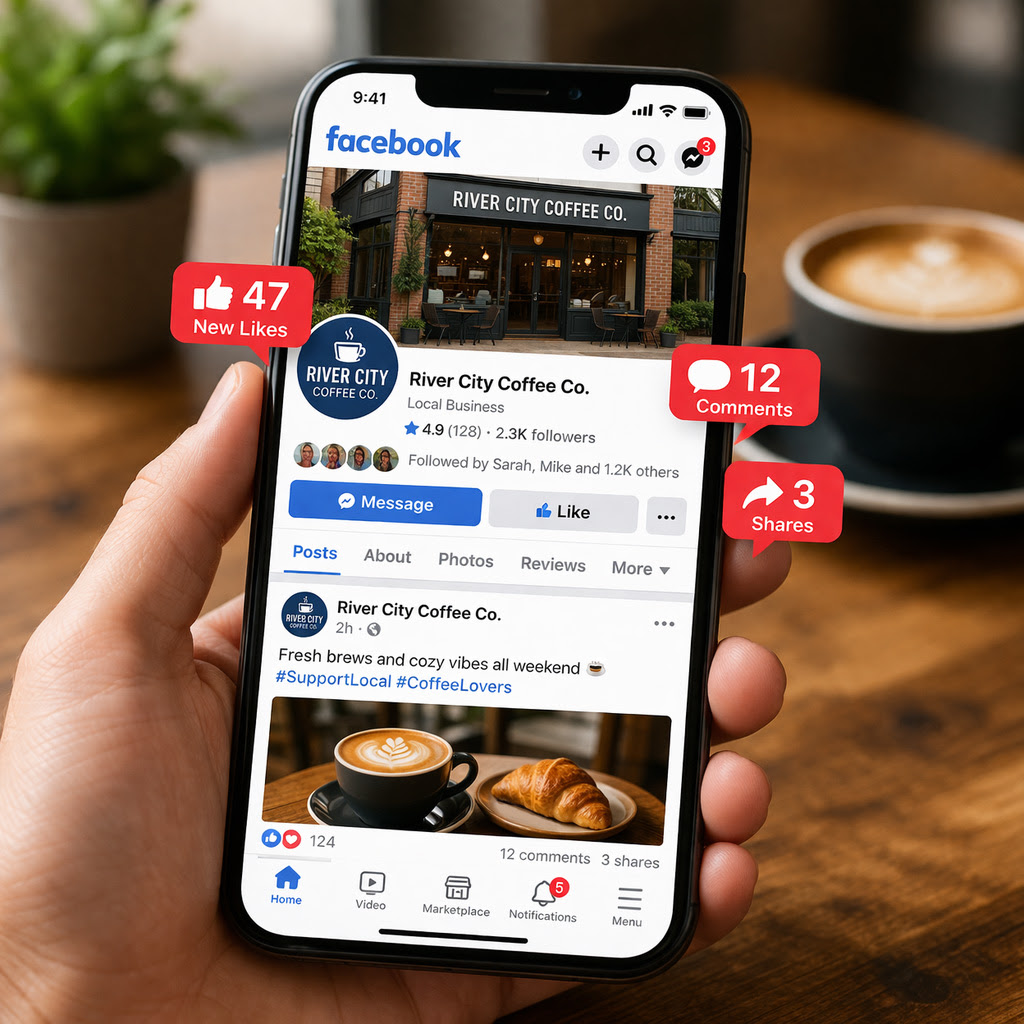
Why performance varies so much from post to post.
Each post is effectively tested. Facebook shows it to a small group first. If people engage, through comments, shares, or watch time, it expands the reach. If they don’t, the post is shown to fewer people.
Businesses are feeling the shift.
Posting occasionally or sharing general updates is no longer enough to stay visible. Even consistent posting can fall flat without a clear approach.
The difference is strategy and consistency.
Businesses that are seeing results are not necessarily posting more, they’re posting with intention and regularly with content that gives people a reason to engage.
That might include:
- A quick photo from a recent job with a short, relatable caption
- A simple question tied to a common customer issue
- A short video showing work in progress or a finished result
These types of posts tend to generate interaction, and that interaction is what drives reach, including to people who don’t already follow the page.
In addition, maintaining a steady presence with content that aligns with how Facebook is prioritizing posts today builds stronger engagement signals and increases the likelihood that future posts will be seen.
Facebook Groups are still part of the mix.
Local groups, in particular, can help extend visibility by placing content in front of active, engaged audiences. However, there is no clear evidence that Facebook’s current updates specifically boost posts simply because they are shared in groups. The advantage comes from the interaction within those communities.
Taken together, these changes point to a clear shift.
Facebook is no longer a platform where visibility comes from simply having followers. It’s driven by how your content performs and how people respond to it, both from your existing audience and beyond it.
To stay visible, businesses should:
- Post consistently with a clear purpose
- Create content that invites interaction
- Share real, relevant examples instead of generic promotions
- Understand that strong posts can reach non-followers
- Support organic efforts with a thoughtful ad strategy
Facebook is still a powerful tool for local businesses. But it now rewards content that stands out across the platform, not just within your existing audience.